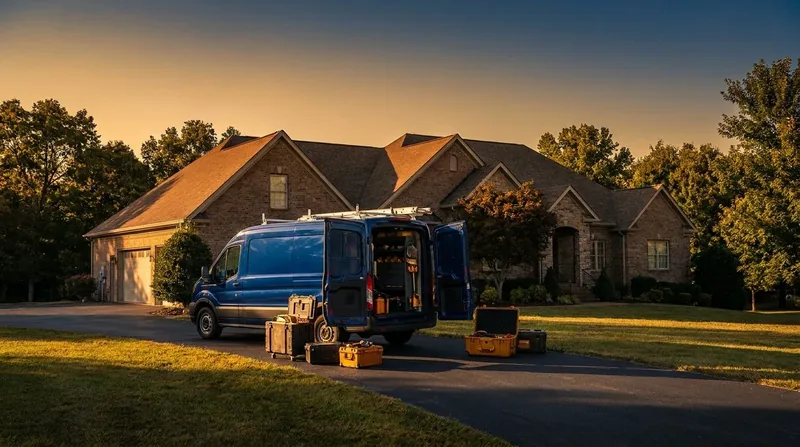
How to Start a Tree Service in New Jersey: Tree Care Business Registration and a Licensed Tree Expert
How to Start a Tree Service in New Jersey: Tree Care Business Registration and a Licensed Tree Expert
Starting a tree service in New Jersey means completing two sets of paperwork. The first is standard business formation: forming an LLC or another entity, registering with the state for taxes, and keeping annual filings current. The second is tree-specific. Under the Tree Expert and Tree Care Operator Licensing Act (N.J.S.A. 45:15C-11), a tree care business registers with the Board of Tree Experts and employs a Licensed Tree Expert or Licensed Tree Care Operator for each office. If you have searched for an nj tree service license, this Board registration and licensed staffing requirement is what you are looking for. New Jersey does not issue a general business license, so the Board requirement is the piece most new tree businesses need to plan around.
This guide covers the steps in the order most people should take them. We include the fees and deadlines we could verify, and we flag the points you must confirm with the agency that sets them. This is informational content, not legal or tax advice. Talk with a New Jersey attorney and a CPA before you choose a structure, sign a lease, or hire your first crew member.
What You Need Before You Start
Gather these items before you file anything. Several steps depend on them.
- A business name that you have checked in the state database. If you form an LLC, the name must carry a designator such as LLC, L.L.C., Limited Liability Co. or Limited Liability Company.
- A New Jersey street address for your registered office. A PO box is not enough on its own.
- A registered agent, which can be an individual or a business entity registered and in good standing with the State Treasurer.
- Owner information for every member or officer, plus a federal employer identification number (EIN) from the IRS for tax and payroll registration.
- A payment method for the $100 formation fee. Budget $50 more if you reserve a name first.
- A licensed person for your office. You or an employee must hold a Licensed Tree Expert or Licensed Tree Care Operator (nj ltco) credential. Budget $100 for the exam fee if you need to sit for it.
- Insurance quotes for at least $1,000,000 in general liability coverage, which the tree care law requires.
- Your municipality's contact details. Local permits come from your town, not from the state or the county.
Step 1: Confirm Which Work Falls Under the Tree Care Law
Before you buy a truck or print a sign, confirm what the law covers. The tree care licensing act exempts ground-only maintenance. Work that stays at ground level may fall under that exemption. Work involving trees, such as pruning, removal, and climbing, generally falls outside it. Do not assume a service sits on one side of the line. Ask the Board of Tree Experts to confirm in writing how the exemption applies to each service you plan to offer, and keep that answer in your business file.
Step 2: Choose Your Business Structure
Your structure drives your filing fees, your tax treatment, and your paperwork. Three common options for a tree service:
- Sole proprietorship. There is no state formation filing. If you operate under a name other than your own, you register a trade name with the county clerk, and each county sets its own fee. You and the business are the same legal person, so business debts can reach your personal assets. That matters in a trade with climbing and chainsaw risk.
- LLC. The Certificate of Formation costs $100, and the annual report costs $75. New Jersey imposes no franchise tax on LLCs. Profits pass through to the members and are taxed under the New Jersey Gross Income Tax at graduated rates from 1.4% to 10.75%. An LLC treated as a partnership with more than two owners and New Jersey source income owes a partnership filing fee of $150 per owner, capped at $250,000, plus a 50% installment prepayment reported on Form NJ-1065. An LLC that elects corporate treatment pays Corporation Business Tax instead. Confirm your treatment with a CPA.
- Corporation. The Certificate of Incorporation also costs $100, with a $75 annual report. A corporation pays Corporation Business Tax on net income, with a 6.5% rate on entire net income of $50,000 or less. That is more complex than pass-through taxation, so get professional advice before you choose it.
Older guides list $125 for LLC and corporation formation. The current fee is $100.
Step 3: Check and Reserve Your Business Name
Search the state database before you commit to a name using the New Jersey business name search. The name must be distinguishable from every other name in the database. The Division of Revenue and Enterprise Services (DORES) checks availability during the filing review and will add a designator if you leave one off, but it is better to get the name right the first time.
If you need to hold the name while you finish your paperwork, a name reservation costs $50 and lasts 120 days. It is renewable. Use the name reservation form.
If your LLC will operate under a name other than its legal name, file an Alternate Name Registration with DORES. The fee is $50 per alternate name, with a $50 renewal. Sole proprietors and general partnerships file a trade name with the county clerk instead, and county fees vary. Details are on the state business names page. New Jersey has no publication requirement for new businesses, so you do not need to run a newspaper notice.
Step 4: File Your Certificate of Formation
File your Certificate of Formation, which the state calls a Public Records Filing for New Business Entity under Title 42, through the Online Business Entity Filing portal on the NJ Business Portal. The filing fee is $100. Online filings are generally entered and reflected in state records in roughly one business day. Mailed filings take longer. Expedited service applies only to over-the-counter and fax requests, so it will not speed up an online filing.
Your registered office must be a New Jersey street address. A PO box can be listed only if the street address is listed too. Your registered agent must be named, and that agent must be an individual or a registered business entity in good standing. Choose an agent who will reliably receive legal papers and get them to you. Changing the registered office or agent costs $25 later, and an agent who resigns without naming a successor also triggers a $25 charge.
Step 5: Register With the Division of Revenue (NJ-REG)
After your entity exists, complete tax and employer registration with the Division of Revenue using Form NJ-REG. The registration produces your New Jersey tax identification number and, where applicable, a sales tax certificate of authority. New Jersey's state sales tax rate is 6.625%, but whether a given tree service charge is taxable depends on the work. Confirm that point with the New Jersey Division of Taxation before you send your first invoice.
The Business Registration Certificate (BRC) is often confused with a license. It is proof of your NJ-REG tax registration. It is not permission to operate. A BRC is separately required for certain contractors, including contractors and subcontractors doing business with the State and other public agencies, and unincorporated construction contractors working in New Jersey. If you plan to bid on public work, ask the Division whether tree work falls under that requirement.
Step 6: Register With the Board of Tree Experts
This step is what separates a tree service from a general landscaping or hauling company. Under N.J.S.A. 45:15C-11, every tree care business registers with the Board of Tree Experts every two years at a cost of $200. The business must also employ a Licensed Tree Expert (LTE) or a Licensed Tree Care Operator (LTCO) for each office. If your company has two offices, you need a licensed person for each one.
The Board sets the requirements for each credential, so confirm which one fits your planned role before you commit to a staffing plan. Ask the Board how many licensed people your office needs and whether an LTCO can cover the work you intend to do. Do not rely on a sales rep, course provider, or a forum post for these answers.
The Board also administers the exam. The nj tree expert exam fee is $100. Confirm eligibility, application deadlines, scheduling, and study materials directly with the Board of Tree Experts. Course sellers may describe requirements that are out of date.
Plan for the licensed person before you advertise tree care work. A registration with no licensed person employed behind it leaves the business out of compliance, and you will have to explain that gap to clients, insurers, and any municipality that asks.
Step 7: Put the Required Insurance in Place
Carry at least $1,000,000 in general liability coverage. That is the minimum the tree care law requires. Many clients and general contractors ask for more, or for certificates that name them as additional insured, so get quotes that match your contracts. Ask an agent about workers' compensation, commercial auto, and equipment coverage as well. General liability does not replace workers' compensation for injuries to your own crew, and tree work carries real injury and property risk.
Step 8: Check Local Permits in Every Town You Serve
Counties do not license businesses in New Jersey, so you will not need a county license. Municipalities may still require permits for tree removal, work in the public right-of-way, street tree trimming, or a local business registration. Call the clerk, zoning office, or construction office in each town where you plan to work. Ask about tree removal permits, right-of-way rules, and any local registration. Expect to repeat this check for each municipality, because the rules differ from town to town.
Step 9: Open a Bank Account and Set Up Records
Open a business bank account in your entity's name and keep business and personal money separate. Track each job, crew hours, equipment purchases, and fuel receipts from the first day. Clean records make your annual filings and any tax questions faster to answer. A CPA can tell you what your tax filings require for the structure you chose.
Step 10: Calendar Your Recurring Deadlines
- Annual report, $75 per year. Due by the last day of the month in which the business was formed. Two consecutive missed years lead to revocation.
- Board of Tree Experts registration, $200 every two years. Set the reminder well ahead of the renewal date.
- Licensed staff renewals. Confirm the renewal schedule for each LTE or LTCO with the Board.
- Insurance renewal. Confirm your $1,000,000 general liability limit still meets your contracts at every renewal.
- Tax filings. Confirm the due dates for your structure with your CPA.
Common Mistakes to Avoid
- Quoting the old $125 formation fee. The current fee is $100.
- Looking for a county license. Counties license nothing in New Jersey. Your local permits come from the municipality.
- Treating the BRC as a license. The BRC proves NJ-REG tax registration. It does not authorize tree care work.
- Advertising tree work before the Board registration and licensed person are in place. Fix this before your first marketing dollar is spent.
- Assuming the ground-only exemption covers your services. Get the Board's answer in writing for each service.
- Letting the Board registration lapse. It renews every two years, and a missed renewal leaves you out of compliance.
- Skipping the annual report. Two consecutive missed years lead to revocation of your entity.
- Buying less than $1,000,000 in general liability coverage. The state minimum is the floor, not the target for most clients.
- Using a PO box as the registered office. The registered office must be a New Jersey street address.
What Results to Expect
Following these steps in order may leave you with a formed entity, a state tax registration, and a Board registration backed by a licensed person. The state filings themselves are often quick when made online. The licensing steps usually set the pace, because they depend on your staff's qualifications, the exam schedule, and the Board's processing time. Plan for licensing to be the longest part of the process. Confirm current processing times with the Board before you commit to a start date for paid work.
Where to Get Help
The New Jersey Small Business Development Centers offer business counseling for new owners. The SBA New Jersey district page lists federal resources for small businesses in the state. For the Board of Tree Experts, confirm the current application page and contact details before you file, because agency pages change.
This article is informational only and is not legal or tax advice. Fees, deadlines, and licensing rules change. Confirm current requirements with the agencies named above, and consult a qualified New Jersey attorney and a CPA before you form your business, choose a tax structure, or hire licensed staff.
Keep exploring: related New Jersey guides
- How to Start a Kennel, Pet Shop or Grooming Business in New Jersey
- How to Start a Charter Fishing or Boat Rental Business in New Jersey
- How to Start an LLC in New Jersey
- New Jersey Business License
- How Much Does It Cost to Start a Business in New Jersey
- All New Jersey business types
- Every New Jersey guide in one place