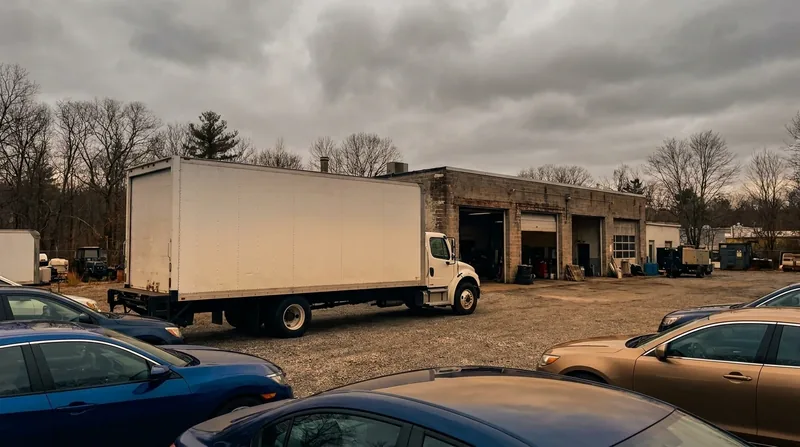
How to Open an Auto Body or Repair Shop in New Jersey: MVC Body Shop License and Inspection Facilities
How to Open an Auto Body or Repair Shop in New Jersey: MVC Body Shop License and Inspection Facilities
If you plan to open an auto body shop in New Jersey, the approval you need first is the Motor Vehicle Commission (MVC) auto body repair facility license. It is the core state license for body work, and you need one for each location. Mechanical repair such as engine, brake, and transmission work does not require a separate state license, so a general repair shop and a body shop face different paperwork. If you also want to perform state vehicle inspections, you need a private inspection facility license on top of your body license.
This guide covers the nj auto body license requirements in the order most owners find easiest to follow: business entity, location, insurance, environmental rules, the MVC application, and the optional inspection license. It is informational content, not legal or tax advice. Talk to a New Jersey attorney and a certified public accountant (CPA) before you sign a lease, take on a loan, or choose an ownership structure, especially if you plan more than one location.
What You Need Before You Start
Gather these items before you file anything. A missing document can stall a license package.
- A business name that is available on the state business database and includes a designator such as LLC, L.L.C., Limited Liability Co., or Limited Liability Company.
- A New Jersey street address for your registered office, plus a registered agent who meets state requirements.
- A federal Employer Identification Number (EIN) from the IRS.
- A signed lease or purchase agreement for the shop location, along with the property's zoning designation.
- Written zoning approval from your municipality or a Certificate of Occupancy (CO) that covers auto body use.
- Insurance quotes for garage liability and garage keepers' liability that meet the MVC minimums (covered in Step 4).
- A floor plan of the shop and a photo or drawing of the exterior sign.
- A written plan for how you will store and dispose of waste fluids and how you will manage any spray booth.
- Budget for the state fees listed in this guide, plus equipment, rent, and working capital.
Step 1: Confirm Which License Path You Need
New Jersey separates body work from mechanical work and from inspections. Confirm which activities you will perform before you apply, because the license you hold determines what you can legally do at that address.
| Activity | State approval | What to know |
|---|---|---|
| Auto body repair | MVC auto body repair facility license | One license per location. $20 application plus $350 license fee. Renewal is $350. |
| Mechanical repair | No state license | Check your local zoning to confirm mechanical repair is allowed at the site. |
| Heavy vehicles (14,000 lb or more) | Heavy-duty endorsement on the MVC license | Confirm the endorsement request process with the MVC before you buy heavy-vehicle equipment. |
| State vehicle inspections | Private inspection facility license | $270 initial, $250 renewal. Requires at least one licensed inspector. |
The phrase "nj mechanic license" appears often in search results, but the state does not issue a separate general mechanic license for mechanical repair. If your shop does both body and mechanical work, the MVC body license covers the body side, and mechanical work falls under your local zoning and your general business registration.
Step 2: Form Your Business Entity
Many owners form a limited liability company (LLC) or a corporation before they apply for MVC approval, so the license can be issued in the entity's name. The New Jersey Division of Revenue and Enterprise Services (DORES), part of the Department of the Treasury, handles formation.
- Check name availability. Search the state database at the DORES business name search. The name must be distinguishable from every other name on the database. DORES will add a designator if you leave one off, but it is better to choose the name with LLC in it from the start.
- File the formation document. An LLC files a Certificate of Formation. A corporation files a Certificate of Incorporation. The filing fee is $100 for both, effective since July 1, 2026. Ignore older articles that quote $125. Online filings go through the Online Business Entity Filing portal on the NJ Business Portal, where processing is typically about one business day to appear in state records. Mailed filings take longer.
- Name a registered agent and registered office. The registered office must be a New Jersey street address. A PO box may be used only if the street address is listed as well. The agent may be an individual or a business entity registered and in good standing with the State Treasurer. Changing the agent or office costs $25.
- Reserve the name if needed. A name reservation costs $50 and lasts 120 days, renewable. Use it only if your MVC and lease timeline will run longer than your name is safe without a filing.
- Register a DBA if you need one. If the shop will operate under a name other than the entity name, file an Alternate Name Registration with the state for $50, with a $50 renewal. Confirm the process at the New Jersey business names page.
- Complete tax and employer registration. Every business must register with the Division of Revenue on Form NJ-REG after forming. That produces your New Jersey tax ID number. The Business Registration Certificate (BRC) is proof of that tax registration. It is not a business license, and it is not the MVC license.
Keep your annual report on the calendar from day one. The annual report is $75 and is due by the last day of the month in which the business was formed, every year. Two consecutive missed years lead to revocation. New Jersey does not require a newspaper publication for a new LLC or corporation.
An LLC has no franchise tax. Profits pass through to the members and are taxed under the New Jersey Gross Income Tax, at graduated rates from 1.4% to 10.75%. If your LLC is taxed as a partnership with more than two owners and has New Jersey source income, it owes a partnership filing fee of $150 per owner, capped at $250,000, plus a 50% installment prepayment reported on Form NJ-1065. An LLC that elects corporate treatment pays Corporation Business Tax instead. A CPA should confirm which treatment fits your ownership.
Step 3: Secure a Location That Can Be Licensed
The MVC license is tied to a physical site, so the location must pass zoning and building review before the MVC will issue the license. Many owners sign a lease first and learn later that the use was not allowed. Avoid that by getting written confirmation before you commit money.
- Ask the zoning office in writing. Confirm that auto body repair is a permitted use in that zone and that the building can host paint work if you plan to spray. Ask whether a variance or site plan review is needed.
- Get zoning approval or a CO. The MVC requires documentation of municipal zoning approval or a Certificate of Occupancy for the site. Your municipality issues these, not the state. Ask for the exact document the MVC expects, because local forms vary.
- Confirm the exterior sign and office. The MVC expects an exterior sign identifying the business and an office at the location. Check your municipality's sign ordinance before you order a sign, since size and lighting rules are local.
New Jersey issues no statewide general business license, and counties do not license businesses. Local approvals come from the municipality, so the township or city is the agency you will spend the most time with on zoning.
Step 4: Buy the Required Insurance
The MVC requires two types of coverage for an auto body repair facility. Your insurer must meet both minimums:
- Garage liability: at least $300,000.
- Garage keepers' liability: at least $50,000, which covers customer vehicles in your care, custody, and control.
Ask your broker for policies that name the correct legal entity and location. Request the certificate or binder in the form the MVC accepts. Confirm with the MVC exactly what evidence it wants and how it wants it submitted. A policy that lapses during the license term can put your approval at risk, so set a reminder for each renewal date.
Step 5: Check Environmental Rules Before You Buy Equipment
Paint and waste are the two areas where a body shop most often runs into trouble after opening. Check with the New Jersey Department of Environmental Protection (DEP) before you buy equipment or sign a build-out contract.
- Spray booths: Ask DEP whether an air permit is required for your booth, what it covers, and how long the review takes. Do not install a booth on the assumption that a permit will be easy to obtain.
- Waste fluids: Ask DEP how to handle used oil, solvents, coolant, paint waste, and rags. Confirm which waste must go to a licensed hauler and what records you must keep.
Get DEP's answers in writing where you can. Your build-out plan, your floor drains, and your ventilation design all depend on these answers.
Step 6: File Your MVC Auto Body Repair Facility Application
Once your entity, location, insurance, and environmental plan are in place, apply to the MVC for the auto body repair facility license. The application fee is $20, and the license fee is $350. You need one license for each location, so a second shop requires a second application and a second license fee.
- Assemble the package. Include your entity documents, the site's zoning approval or CO, proof of the exterior sign and office, proof of insurance at the required minimums, and the names of the people responsible for the facility.
- Request a heavy-duty endorsement if needed. If you will repair vehicles rated at 14,000 lb or more, request the heavy-duty endorsement on the application. Confirm with the MVC whether the endorsement requires its own review.
- Submit and pay. Pay the $20 application fee and the $350 license fee as the MVC directs. Keep copies of everything you submit and the confirmation for each payment.
- Respond to requests quickly. The MVC may ask for missing documents or clarification. Answer in writing and note the date you sent the reply.
Processing times are set by the MVC and can change, so confirm the current timeline on the MVC website at nj.gov/mvc before you schedule your opening date.
Step 7: Decide Whether You Need a Private Inspection Facility License
A private inspection facility is a separate license that allows a shop to perform state vehicle inspections. It does not replace the body repair license. Many owners pursue it later, but you can plan for it from the start by choosing a bay layout and staffing plan that will work for inspections.
- Initial fee: $270.
- Renewal fee: $250.
- Staffing: At least one licensed inspector must be on the license. Confirm with the MVC how inspectors are licensed and what training or documentation they need.
Inspection work carries its own record-keeping and conduct rules. Read the MVC requirements in full before you advertise inspections.
Step 8: Handle Tax Registration and Sales Tax
Your NJ-REG registration gives you the tax ID number you need for payroll and for most state filings. If you sell taxable goods, you also need a sales tax certificate of authority, which you can request through the NJ Business Portal business registration page. The state sales tax rate is 6.625%.
Not every charge on a repair invoice is taxed the same way. Parts, labor, and shop supplies can be treated differently. Ask the Division of Taxation at nj.gov/treasury/taxation or a CPA how your invoices should be structured before you open.
Step 9: Keep the License Active
Opening day is not the finish line. Put these recurring items on a shared calendar:
- MVC auto body repair facility renewal: $350. Confirm the renewal period and deadline with the MVC.
- Private inspection facility renewal, if you hold it: $250.
- LLC annual report: $75, due by the last day of the formation month each year.
- Insurance renewal at or above the $300,000 garage liability and $50,000 garage keepers' liability minimums.
- Registered agent and registered office: keep both current, and file a change for $25 if either one changes.
- Zoning, sign, and CO conditions as your municipality sets them.
- DEP permit conditions and waste hauling records.
Tips and Common Mistakes to Avoid
- Signing a lease before zoning is confirmed in writing. A verbal "it should be fine" is not enough.
- Treating the Business Registration Certificate as a license. The BRC proves tax registration. The MVC license is what lets you repair vehicles.
- Assuming one license covers two locations. Each body shop location needs its own MVC license and its own fees.
- Buying a spray booth before the DEP answer. Equipment bought too early can sit unused or need to be moved.
- Using a PO box as the only registered office address. The street address must appear.
- Using an old $125 formation fee in your budget. The current LLC and corporation filing fee is $100.
- Assuming mechanical work needs its own state license. It does not, but it still needs to fit your zoning.
- Letting the insurance lapse. A gap can stall renewals and create serious liability exposure.
- Missing the annual report. Two consecutive missed years can lead to revocation.
What Results to Expect
A well-prepared application may help you move through the process with fewer requests for missing documents. Most of the delay in opening a body shop comes from zoning, environmental permits, and missing paperwork, not from the state fees, which are modest. Owners who confirm each agency's requirements in writing before they commit to a site and equipment are generally in a better position to open on schedule. No one can guarantee approval timing or outcomes, so build a buffer into your opening date and your cash plan.
Where to Confirm Each Requirement
- Business formation and name search: NJ Business Portal, Online Business Entity Filing and the Division of Revenue and Enterprise Services.
- MVC auto body repair facility and inspection facility licenses: New Jersey Motor Vehicle Commission.
- Air permits and waste fluid rules: New Jersey Department of Environmental Protection.
- Taxes and sales tax: New Jersey Division of Taxation.
- Zoning, signs, and Certificates of Occupancy: your municipal zoning and construction office.
- Small business guidance: the New Jersey Small Business Development Centers (NJSBDC).
Final Note
Opening an auto body shop in New Jersey comes down to sequence: form the entity, lock down a licensable location, buy the required insurance, check DEP before you buy paint equipment, then file with the MVC. This article is informational content, not legal or tax advice. Before you commit to a lease, insurance policy, or ownership structure, consult a qualified New Jersey attorney and a CPA about your specific situation.
Keep exploring: related New Jersey guides
- How to Open a Driving School in New Jersey
- How to Start a Courier and Delivery Business in New Jersey
- How to Start a Warehouse or 3PL Business in New Jersey
- How to Start a Limousine Business in New Jersey
- How to Start an LLC in New Jersey
- New Jersey Business License
- How Much Does It Cost to Start a Business in New Jersey
- All New Jersey business types
- Every New Jersey guide in one place